As race day approached, the journey began quietly. Before heading to Bromo, I made a short stop in Surabaya to visit a friend I met during my first marathon in 2024. He welcomed me like family, guiding me through the city and offering a sense of calm before what lay ahead. Before I left, he wished me luck. It was a reminder that preparation does not always come from more training, but sometimes from slowing down.
Arriving in Bromo that misty afternoon felt almost surreal. I had been there before, once as a tourist, riding horses and taking photos across the sand. Back in college, I never imagined I would return not for leisure, but to run 70 kilometers. Standing there again underscored how much can change when you keep choosing growth.
At the race venue, familiar faces appeared. I greeted friends from Huruhara at the Fieldway booth before collecting my race pack. By mid afternoon, I returned to the hotel to prepare. Dinner was intentionally simple. Two packs of Indomie Goreng and sate ayam. After that, I tried to sleep early and managed a few solid hours of rest.
The alarm went off at 11 PM, two hours before the flag off. The night air was cold and the nerves were unmistakable. I walked to the venue, met friends from Running Rage, warmed up, exchanged brief words of encouragement, and took one final breath before the countdown ended. Once the race begins, the world narrows to a single task. Move forward.
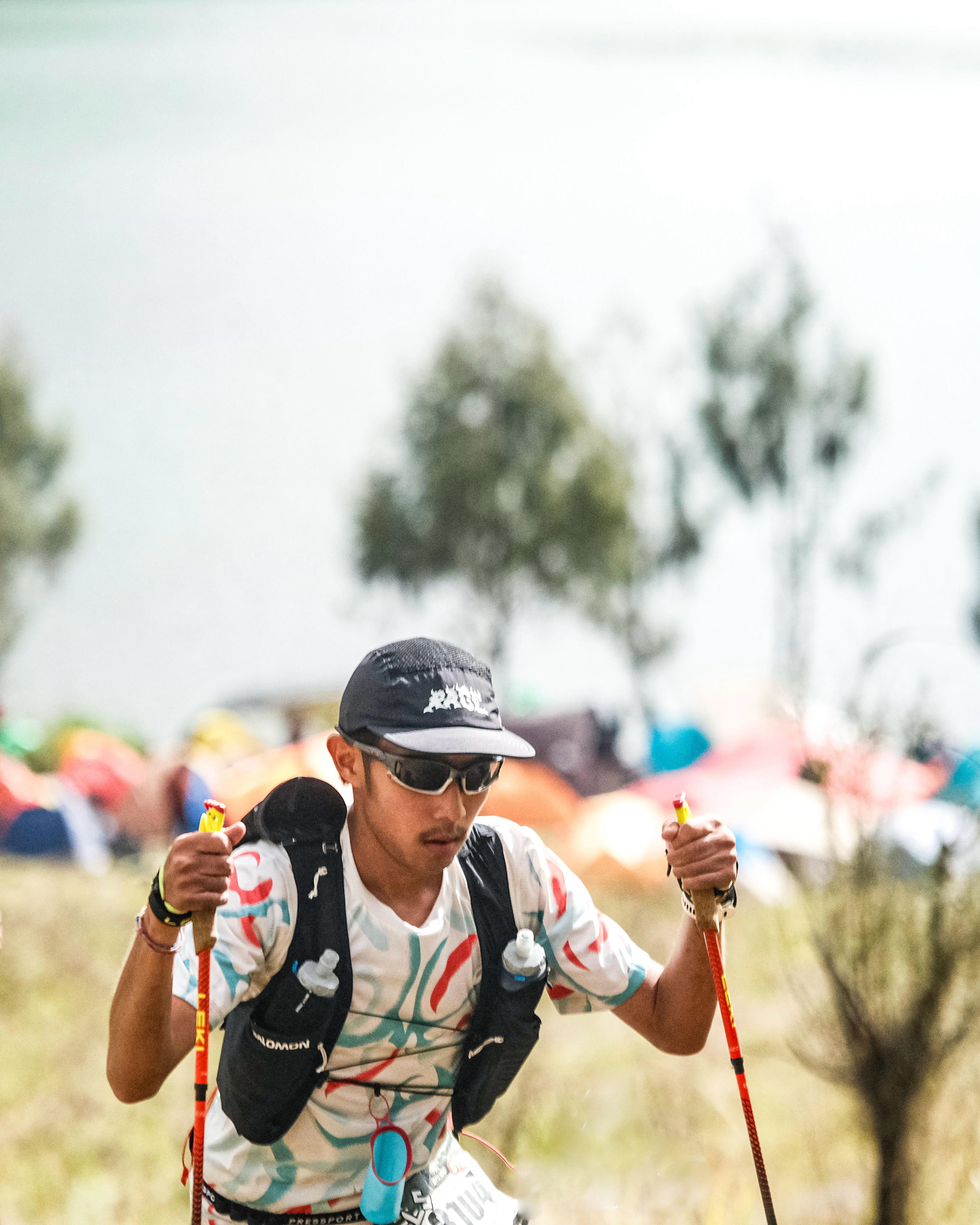
The climb to B29 arrived early and immediately demanded respect. From below, it looked breathtaking. On the ascent, it was unforgiving. Poles were out, heads were down, and space was limited. Progress was slow, but eventually the summit came. At the water station, I reminded myself to fuel carefully. Ultra racing rewards patience long before it rewards strength.
As dawn approached, my legs still felt intact. The downhill was technical in the dark, but morale remained high. At Ranu Pani, the smell of warm soto ayam cut through the fatigue. That single bowl felt essential. Friends began to appear one by one, and we decided to move together for a stretch. Too much time alone can quietly erode the mind. Shared movement keeps it steady.
Ranu Kumbolo stopped us completely. When I finally lifted my head and saw the lake, I could not help but smile. We sat quietly by the water, speaking very little, allowing the moment to settle. Rest, I realized, is not a sign of weakness. It is part of finishing.
The climb after Kumbolo was the most demanding section of the race. Ten kilometers leading to the highest point on the course. The early part felt manageable, then the fatigue arrived all at once. Poles became ineffective. Legs were exhausted. Runners began to fall away. At the top, we collapsed into a brief rest. This is where ultra running becomes honest. When comfort disappears, only intention remains.
Challenges continued. Broken pipes flooded sections of the trail. Long queues cost valuable time. Mud covered shoes and legs. At Jemplang, the priority was simple. Refuel and change soaked socks. We did not linger. When conditions deteriorate, momentum matters more than perfection.
Bukit Teletubbies hurt more than expected. The distance between aid stations felt endless, and my feet protested every step. Then one of us made the difficult decision to stop. Watching someone so strong choose to DNF was heartbreaking. Ultra distance makes the line between finishing and stopping painfully clear.
At kilometer 60, the cheering station on the Bromo sand brought renewed energy. Familiar faces lifted spirits that were close to empty. We regrouped and committed to the final stretch together.
The final climb was the hardest mentally. Time was tight. Doubt crept in. Some whispered that we might not make it. Someone suggested stopping. I remember saying quietly, “We’ve come this far. At least let’s try.”
I ran with everything I had left. Uphills, downhills, power hikes, and power walks blurred together. I passed runners who had lost hope. I checked my watch constantly. I had left my headlamp behind, so I ran the final section in darkness, guided only by my phone’s light. When I realized there was still time before the cut off, the tears came. Not because I was finishing, but because I might finish alone.
Crossing the finish line was overwhelming. I hugged my loved ones and tried to steady myself. Then, one by one, my friends arrived, finisher medals placed around their necks. I ran to congratulate them, crying and smiling at the same time. The true reward was never just finishing. It was seeing everyone make it through.
The pain, the doubt, and the struggle only deepened my connection to ultra distance running. It offers no comfort and no certainty. What it gives instead is clarity.